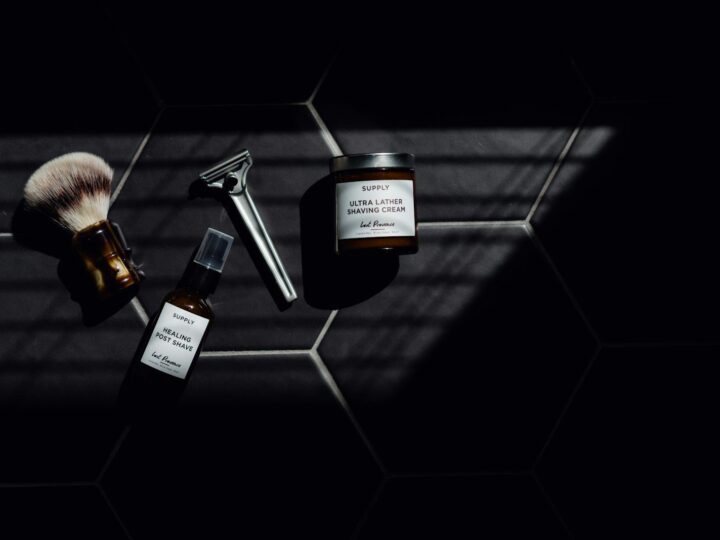
Designer Stubble: How to Grow & Groom It

Stubble looks effortless, which is exactly why so many men get it wrong. The truth is that good designer stubble is one of the most controlled looks in grooming — a deliberate length, a clean set of lines and a rhythm of upkeep that keeps it in that narrow window between “sharp” and “scruffy”. Done well, it flatters almost every face, hides a jaw that isn’t razor-defined, and takes minutes a week. In Singapore’s heat, it’s also the most practical facial hair you can wear. Here’s how to grow it, groom it and keep it looking intentional.
What “designer stubble” actually means
Designer stubble is short, even facial hair that reads as a considered look rather than a few skipped shaves. The key word is even. Random three-day growth is patchy and grows at different rates across your face; designer stubble is trimmed to a single, uniform length and given a crisp boundary at the neck and cheeks. That contrast — soft texture on the face, clean line at the edges — is the whole trick.
Most men land somewhere between one and five millimetres. Shorter than that and you’re really just growing out a clean shave; longer and you’ve crossed into short-beard territory, which needs different upkeep. The stubble zone is small, and staying inside it is what separates a look that’s styled from one that’s simply unshaven.
Finding your perfect length
There’s no single correct number — it depends on how thick your growth is, how dark it reads against your skin, and the effect you want. As a rule, thicker or darker hair looks sharp at a shorter setting, while lighter or sparser growth needs a touch more length to register as intentional.
The honest way to find your number is to grow it out for a week, then trim down in stages and stop the moment it looks right in natural light. Note the guard you used. That’s your setting from then on. Use this as a starting map, then adjust to your own face and growth.
| Stubble length | The look it gives | Typical trimmer setting |
|---|---|---|
| 0.5–1 mm | Faint shadow, barely-there, very clean | Guard off or 0.5 mm |
| 1.5–2 mm | Classic light stubble, tidy and office-friendly | 1.5–2 mm guard |
| 2.5–3 mm | Defined designer stubble, the sweet spot for most | 3 mm guard |
| 3.5–4 mm | Heavy stubble, rugged, more shape and shadow | 4 mm guard |
| 5 mm+ | Bordering on a short beard, needs beard upkeep | 5 mm guard or higher |
The tools: trimmer, guards and a light hand
You don’t need much. A decent adjustable trimmer with a set of guards is the one essential — the guard is what guarantees an even length across your whole face, which is impossible to eyeball freehand. Charge it fully so the motor doesn’t slow and pull halfway through, and keep the blades clean; a clogged trimmer drags and leaves an uneven finish.
Work on a dry, clean face. Wet hair lies flat and springs back longer once it dries, so you’ll cut shorter than you meant to. Move the trimmer against the direction of growth for an even cut, take your time, and go over each area twice rather than pressing harder. Pressing harder doesn’t cut shorter — it just irritates the skin and risks catching it.
Lining the neck and cheeks
This is where designer stubble is won or lost. The length gives you the texture; the lines give it the intent. Two edges matter.
The neckline
The most common mistake is shaving the neck too high, up towards the jaw, which leaves a hard chinstrap edge and makes the stubble look like it’s floating. The rule that works: imagine a gentle U-shaped curve sitting roughly two finger-widths above your Adam’s apple, and clean everything below it to bare skin with your trimmer guard off or a razor. Leave the stubble that sits on the jaw itself.
The cheek line
Most men need to do very little here — just clear the stray hairs that sprout high on the cheek, above your natural growth line. Follow the line your hair already gives you rather than forcing a sharp geometric edge. A softer, natural cheek line suits stubble far better than a carved one, which can look severe at such a short length.
If lining freehand makes you nervous — and the neck genuinely is hard to see and reach yourself — this is exactly the kind of detail worth handing to a barber. A quick shape-up as part of your men’s cut and grooming visit sets the boundaries cleanly, and you just maintain them at home afterwards.
Upkeep: the every-few-days rhythm
Stubble doesn’t stand still. It keeps growing, so the look only holds if you reset it on a schedule. For most men that’s a quick pass with the trimmer every two to four days — sooner if your growth is fast, a little longer if it’s slow. The whole job takes a few minutes: trim the face back to your chosen length, then re-clean the neckline below the curve. That’s it.
The neck grows back fastest and is the first thing to look untidy, so if you’re short on time, at least run the trimmer under the jaw. Skipping the reset for a week is what tips designer stubble back into “forgot to shave” — the length creeps up and the neat lines blur.
Humidity, itch and skincare
Singapore’s climate is the real test. The stubble stage is famous for itch, because short, freshly cut hairs have blunt tips that prick the skin, and heat and sweat make it worse. A few habits keep it comfortable:
- Wash your face daily with a gentle cleanser to clear the sweat, oil and dust that collect in short stubble and cause itch.
- Moisturise the skin underneath — dry skin under stubble is the main cause of flaking and irritation. A light, non-greasy moisturiser is enough; you don’t need a heavy beard oil at this length, though a drop or two on the worst days helps.
- Watch for razor bumps around the neckline if you shave that edge, especially if your hair curls. If you’re prone to them, our guide on razor bumps and ingrown hair is worth a read.
- Dry off after sweating. Damp stubble in humidity is where itch and odour start, so towel your face after a workout or a hot commute.
Who designer stubble suits
Honestly, most men. It’s one of the most forgiving looks going. It adds definition to a soft or round face, softens a very sharp jaw, and disguises a weak chin by adding shadow and structure. It also works brilliantly for men with patchy growth — at a short, even length, thin spots are far less obvious than they’d be in a full beard.
The one honest caveat: if your growth is genuinely sparse and very light in colour, stubble may read as almost nothing, and you might prefer to let it grow a touch longer for contrast. And if you work somewhere strict about grooming, keep it on the shorter, tidier end. Beyond that, it flatters more faces than almost any other style — which is why it never really goes out of fashion.
If you’re deciding between stubble, a short beard or a clean shave, or you want your neckline and cheeks set cleanly the first time so upkeep is easy, we’re happy to help you work it out in person. Send us a photo and a quick note about your growth and we’ll tell you honestly what will suit you. WhatsApp us — bring your face, we’ll bring the plan.