Fade Types Explained: Low, Mid, High, Skin & More
“Just give me a fade” is one of the most common things we hear at Orange & Teal in Bedok — and one of the most incomplete. Because “a fade” isn’t one haircut; it’s a whole family of them. Low, mid, high, skin, drop, burst: each one changes where the blend starts, how bold it looks, and who it flatters. Walk in knowing which you want and you’ll walk out with exactly the cut in your head, rather than a rough approximation of it.
This guide breaks down every major fade in plain language — what it is, who it suits, what to pair it with on top, and how to actually ask for it. No jargon overload, just the honest barber’s rundown so you can choose with confidence.
First, what “high” and “low” actually mean
Before the individual types, get this one idea straight and the rest falls into place. When we say a fade is low, mid or high, we’re describing where on your head the fade begins — the point where your hair starts shortening down towards the skin.
A low fade starts just above the ears and around the neckline. A mid fade begins around the temples, roughly halfway up the sides. A high fade starts high up near the crown, leaving only a small cap of length on top. The higher the fade, the more contrast and the bolder the look. That’s the entire framework — everything else is a variation on it. Taken further, a high fade becomes the high and tight cut.
Low, mid and high fades
These three are the backbone of the fade world, and most men will land on one of them.
- Low fade — subtle and versatile. It keeps most of your length and only tapers down low, near the ears and neck. It’s the most office-friendly and the easiest to live with. Perfect if you want clean and current without a dramatic contrast.
- Mid fade — the balanced all-rounder. Starting around the temples, it gives a noticeable gradient without going extreme. If you’re unsure which fade to get, this is the safe, flattering default that suits most face shapes.
- High fade — bold and sharp. The blend rockets up near the crown, creating strong contrast with the top. It’s striking and modern, though it demands more frequent trips to stay crisp.
None is better than the others; they simply sit on a scale from understated to statement. Choose based on your workplace and how much attention you want the cut to draw.
Skin, drop and burst fades
Beyond the basic three, a few specialist fades change the look in their own ways.
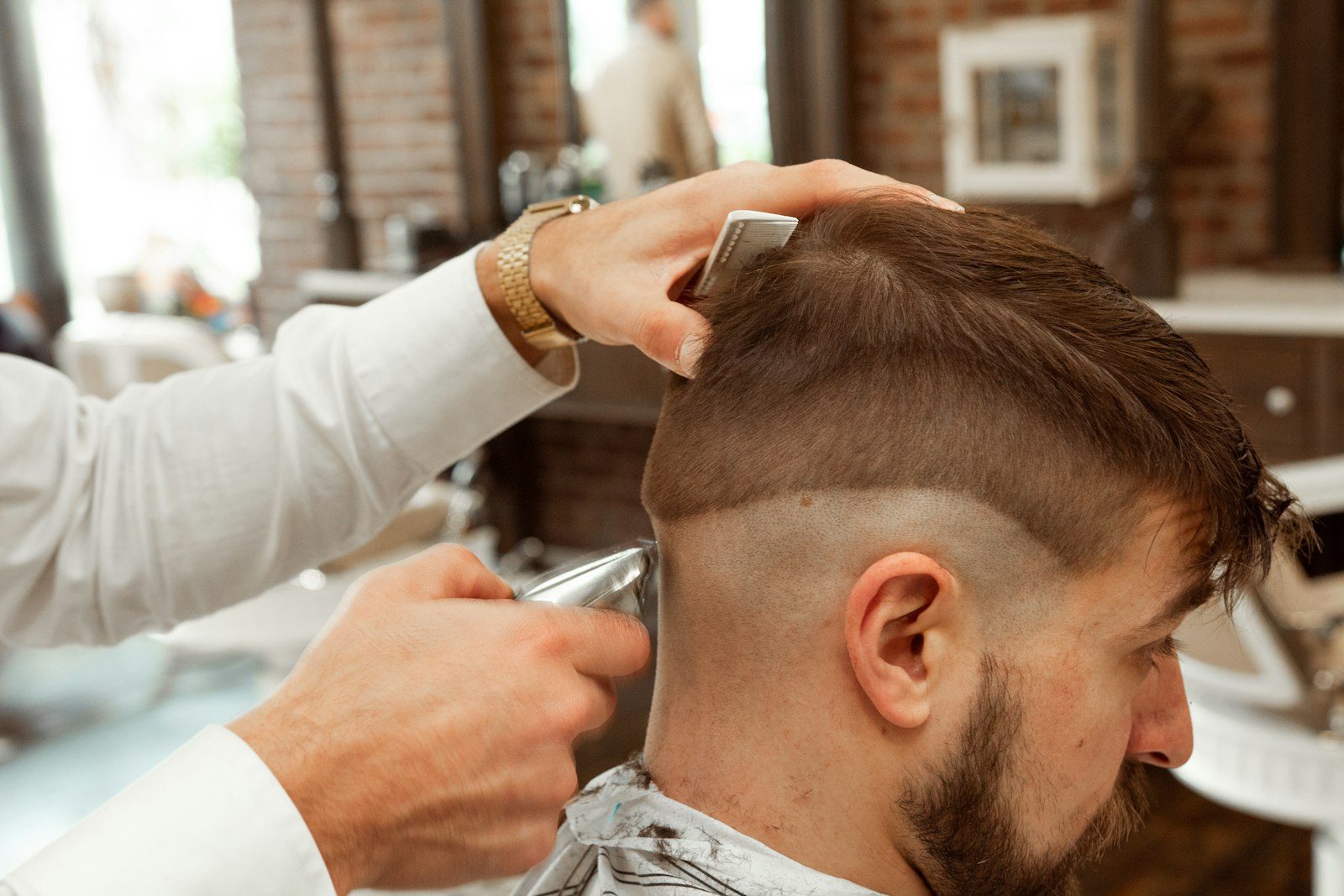
- Skin fade (also called a bald fade) — the hair blends all the way down to bare skin at the bottom. It’s the cleanest, sharpest, most dramatic finish of the lot. It can be paired with a low, mid or high start, and it looks incredible fresh — just know it’s the highest-maintenance of all.
- Drop fade — the fade line curves down behind the ear, “dropping” lower at the back rather than running straight. It follows the head’s natural shape and looks especially good with curly or textured tops.
- Burst fade — the fade radiates out in a semicircle around the ear, leaving length at the back of the neck. It’s a favourite with textured crops, mullets and edgier styles, and it’s a bit more of a fashion-forward choice.
These give you room to personalise. A skin drop fade, for instance, combines the bald finish with the curved line — the kind of detail worth asking your barber about directly.
Fade type, look and best pairings
Here’s the quick-reference version. Use it to match a fade to the top you already have or want.
| Fade type | The look | Best paired with |
|---|---|---|
| Low fade | Subtle, office-safe, keeps length | Side part, comb over, classic crop |
| Mid fade | Balanced contrast, all-rounder | Textured crop, quiff, short pomp |
| High fade | Bold, high contrast, modern | Slick back, tall pompadour, flat top |
| Skin fade | Sharpest, blends to bare skin | Buzz cut, crew cut, styled top |
| Drop fade | Curves down behind the ear | Curly hair, textured top, longer fringe |
| Burst fade | Semicircle around the ear | Textured crop, mullet, edgier styles |
If you already know your favourite top style, work backwards from this table to the fade that frames it best.
Pairing fades with your top
A fade is only half the cut — what happens on top decides the whole vibe. The general rule: the more length and texture you keep up top, the more a fade shows it off. A skin fade with a buzzed top is clean and no-nonsense; browse our buzz cut guide for that route. A high fade with a slick back or quiff is dressy and dramatic. A low fade with a natural crop is easy, everyday smart.
If you like a longer, disconnected top, a fade also pairs naturally with an undercut for extra contrast. And if you’re deciding between a full fade and something gentler, our taper versus fade comparison is the place to start.
How to ask for the fade you want
Here’s where most fades go wrong — not in the cutting, but in the asking. Do this and you’ll get it right:
- Name the height — say low, mid or high so we know where to start the blend.
- Say skin or not — tell us if you want it taken down to bare skin or left with a little length.
- Describe the top — how long, and whether you want to style it up or keep it simple.
- Bring a photo — honestly, it’s the single best thing you can do. A picture removes all the guesswork.
Not confident with the terms? Our guide on how to ask for a haircut in Singapore gives you the exact phrases. And once you’ve got your fade, keep it crisp with our tips on maintaining a fade in the local humidity.
Find your fade with us
Related guides
Whether you want a subtle low fade for the office, a sharp skin fade for the weekend, or a burst fade to go with something bolder, the right choice comes down to your hair, your face and your lifestyle — and that’s exactly what we’re here to figure out with you. Men’s cuts start from $40. Explore our men’s cut and grooming options, browse our haircuts for inspiration, and when you’ve picked your fade, WhatsApp us to book. Cut. Style. Belong.