Taper vs Fade: What’s the Difference?
Ask ten men what the difference is between a taper and a fade, and you’ll get ten slightly different answers — usually delivered with more confidence than accuracy. The two terms get used interchangeably all the time, and honestly, they’re cousins rather than strangers. But there is a real difference, and knowing it changes how you ask for your cut, how sharp you look, and how often you’ll be back in the chair. At Orange & Teal in Bedok, this is one of the most common mix-ups we untangle, so here’s the clear version.
Get this right and your next barber visit goes far more smoothly. You’ll be able to describe exactly what you want, and you’ll know what you’re signing up for in terms of upkeep. Let’s clear it up properly.
The simple difference in one line
Here’s the honest, no-jargon version: a taper is a gentle, gradual shortening of the hair around the edges — the hairline, sideburns and neckline — while keeping some length as it goes down. A fade takes that same idea further and blends the hair all the way down to very short, or even bare skin, higher up the head.
Put another way: every fade is technically a kind of taper, but not every taper is a fade. A taper is subtle and keeps hair on the sides. A fade is dramatic and can take you down to skin. Think of a taper as the polite handshake and a fade as the firm grip — same gesture, different intensity.
What a taper looks like and who it suits
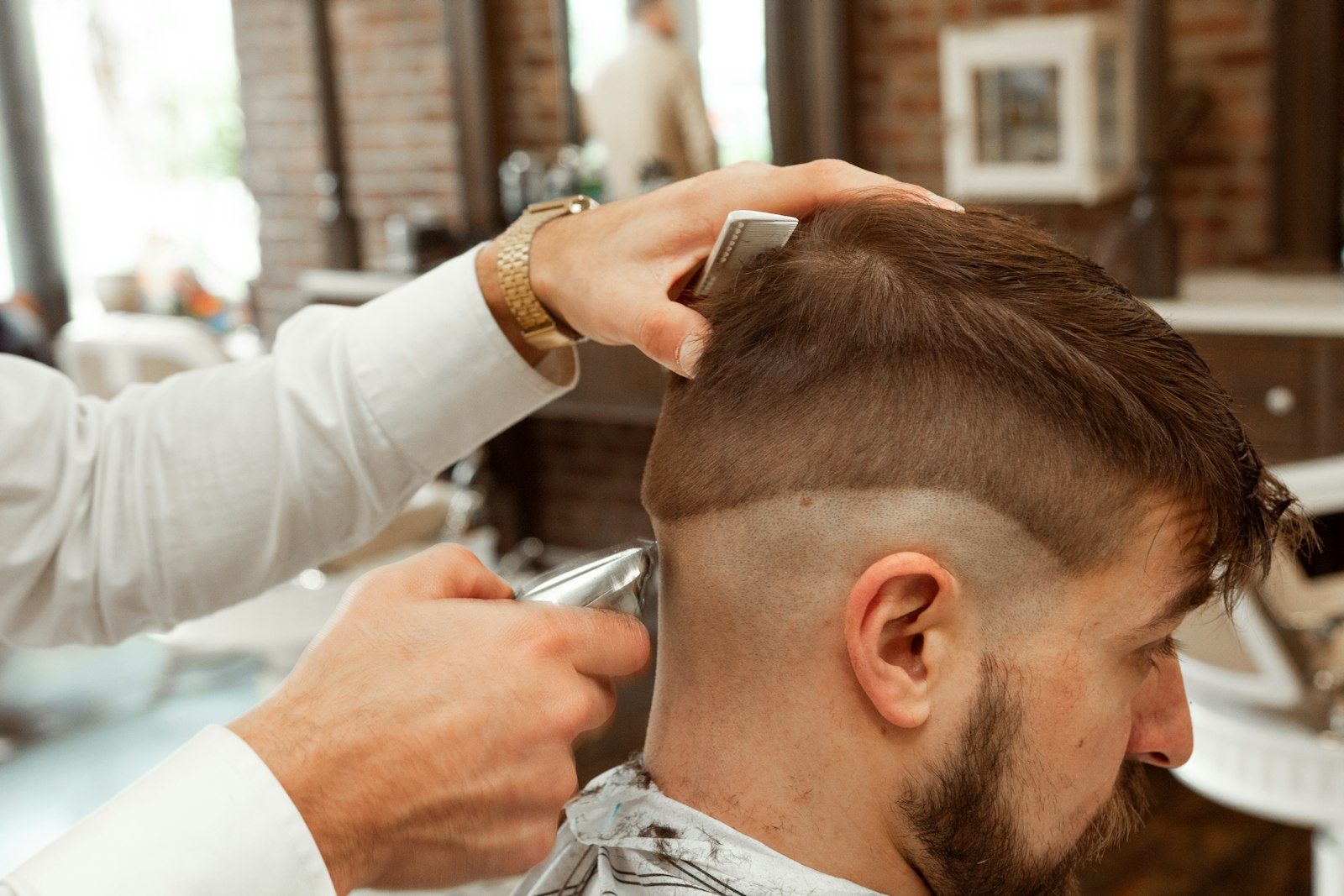
A taper leaves your sides and back with visible hair that simply gets shorter towards the edges. There’s no bald skin, no stark contrast — just a clean, gradual fade-out around the perimeter. The classic version is the taper fade at the neckline and sideburns, where the hair softens neatly into the skin without any harsh line.
Tapers suit you if you want something tidy but understated. It’s the go-to for men in conservative workplaces, older gents who want to look sharp without looking trendy, and anyone who prefers a cut that doesn’t shout. Because it keeps length on the sides, it also works beautifully if you want to grow the top out or keep a natural, softer silhouette.
It’s also the more forgiving choice for men with finer hair or those who aren’t sure about going too short. You keep coverage, you keep options, and you still look clean. If low fuss is your priority, a taper is a strong shout.
What a fade looks like and who it suits
A fade is all about that eye-catching gradient: hair blending from longer on top down to very short — or clean skin — at the bottom. The contrast is the whole point. It looks sharp, modern and deliberate, and it draws attention to the shape of your cut and the styling on top.
Fades suit you if you want a bold, contemporary look and don’t mind the upkeep that comes with it. They pair brilliantly with a textured crop, a quiff, a slick back, or a longer top styled up. There’s a whole family of them — low, mid, high, skin, drop and burst — and each changes the vibe. Our full breakdown of the fade types walks through every one.
The trade-off is maintenance. The shorter and higher the fade, the faster it shows regrowth, which brings us neatly to the practical stuff.
Taper vs fade side by side
Sometimes the clearest way to decide is to see the two lined up against each other. Here’s how they compare across the things that actually matter when you’re choosing.
| Feature | Taper | Fade |
|---|---|---|
| Overall look | Subtle, gradual, keeps length on sides | Bold, high-contrast, blends to short or skin |
| Shortest point | Short hair, rarely skin | Can go all the way to bare skin |
| Formality | Classic, conservative, office-safe | Modern; low fades are office-safe, high fades bolder |
| Best for | Understated, low-fuss, grow-out friendly | Sharp, trend-led, statement styling |
| Upkeep | Every 4–6 weeks | Every 2–3 weeks for a crisp look |
| Grows out | Gracefully; stays tidy longer | Faster; skin fades fuzz within a week |
Neither is “better” — they answer different questions. The right pick depends on your job, your hair, and how often you’re honestly willing to return.
Which suits your workplace
This matters more in Singapore than people admit. If you’re in a corporate, client-facing or conservative environment — law, finance, government — a taper or a low fade is the safe, smart choice. It reads as neat and professional without drawing comment.
If your workplace is creative, casual or you simply have the freedom to express yourself, a mid or high fade gives you that sharp, current edge. A skin fade is the boldest of the lot and looks fantastic, but do a quick sanity check against your office culture first. When in doubt, a low fade is the diplomatic middle ground: contemporary enough to feel current, restrained enough to keep everyone happy.
Upkeep and cost over time
Here’s the part that catches people out. A fade looks incredible on day one, but a high or skin fade can start looking fuzzy within five to seven days, because a millimetre of regrowth is glaringly obvious against bare skin. To keep it truly crisp, you’re looking at a trip every two to three weeks. Our guide on how to maintain a fade covers the between-visits routine.
A taper, by contrast, grows out far more gracefully. There’s no bald skin to betray the regrowth, so you can comfortably stretch to four, five or even six weeks and still look tidy. Over a year, that’s a meaningful difference in both time and money. With men’s cuts from $40, a lower-maintenance taper simply asks less of your calendar. If you’re weighing your options more broadly, our overview of men’s haircut types puts both in context.
Still not sure? Let us help you decide
The truth is, the best answer often comes from a quick chat in the chair. Tell us your job, your hair type and how much upkeep you’re up for, and we’ll steer you towards the taper or the fade that genuinely fits your life — not just the one that looks good in a photo. Browse our men’s cut and grooming options, explore our haircuts, and when you’re ready to get sharp, WhatsApp us. Cut. Style. Belong.