Oily Scalp & Greasy Hair: A Men’s Guide (SG)

You wash your hair in the morning, and by the time you’ve reached the office it’s already looking flat and a little slick at the roots. By afternoon it’s a lost cause. If that sounds familiar, you’re not doing anything wrong and you’re certainly not alone — an oily scalp is one of the most common complaints we hear from men in Singapore, and a lot of it comes down to where we live. Here’s an honest guide to why your hair gets greasy so fast here, and the simple changes that actually keep it in check.
Why Singapore makes hair greasy so fast
Your scalp produces a natural oil called sebum. In a cool, dry climate it’s released slowly and does a useful job keeping hair and skin from drying out. In our heat and humidity, two things happen. First, warmth speeds up oil production, so the glands simply make more. Second, sweat mixes with that oil and spreads it down the hair, so it looks and feels greasy faster than the sebum alone would. Add a humid atmosphere that stops anything from drying properly, and hair that felt clean at 8am can look limp by lunch.
Some of it is fixed — your genes and hair type set your baseline oiliness, and fine, straight hair shows grease sooner because there’s less texture to hide it. But a surprising amount is down to habits, and those you can change. The goal isn’t to strip every trace of oil (that backfires, as we’ll see) but to slow the build-up and stop yourself making it worse.
How often should you actually wash?
The instinct with greasy hair is to wash it more, sometimes twice a day. It feels logical and it’s usually a mistake. When you strip the scalp of oil aggressively and often, the glands read that as a shortage and ramp up production to compensate. You end up on a treadmill: wash, dry out, over-produce, get greasy faster, wash again.
For most men with an oily scalp in Singapore, washing once a day or every other day with a gentle shampoo is the sweet spot. If you’re sweating heavily — after a workout or a long day outdoors — you can rinse with water in between without shampoo, which clears sweat and surface oil without triggering that rebound. The aim is consistency, not frequency. Give your scalp a steady routine and it settles into a calmer rhythm over a few weeks. If your hair is fine as well as oily, our guide to fine and thin hair volume pairs well with this.
Choosing the right shampoo
The label matters more than the brand. Look for a gentle, clarifying or balancing shampoo rather than a heavy, creamy “moisturising” or “smoothing” one — those are built for dry hair and leave residue that weighs oily hair down. Ingredients like salicylic acid or tea tree can help keep the scalp clear, but you don’t need anything harsh or medicated for ordinary oiliness.
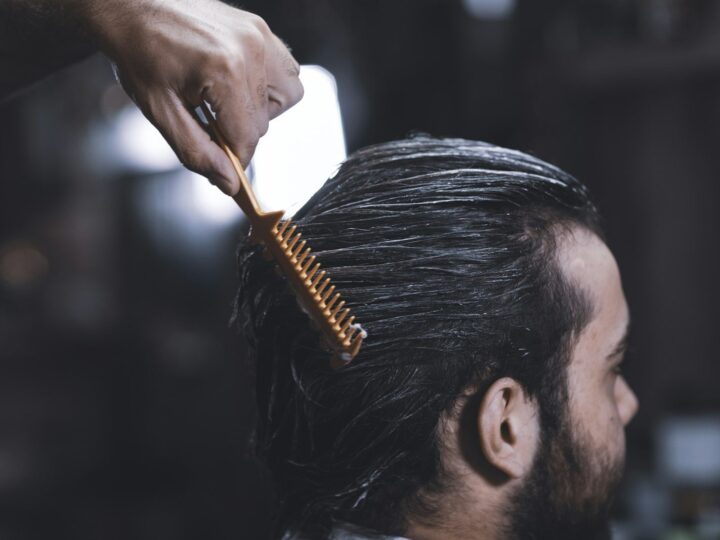
Technique beats product here. Massage the shampoo into the scalp with your fingertips, not your nails, for a good thirty seconds — that’s where the oil is, and where the cleaning needs to happen. The length of your hair mostly gets clean from the rinse-off. And if you condition, keep it to the ends only, never the roots, or you’ll undo the whole wash. For the full picture on products and how they fit together, our men’s hair care routine and scalp care guides are the natural next reads.
Styling that doesn’t add grease
A lot of “oily hair” is actually the wrong product sitting on the scalp. Heavy pomades, waxes and anything labelled “wet look” or “high shine” add their own oil and grip dirt and sweat, so by afternoon your hair looks greasier than it really is. In our climate, switch to matte, water-based products — a clay or a matte paste — and apply them to the mid-lengths and ends, keeping them off the roots.
Use less than you think you need; you can always add more. And be honest about how often you touch your hair — running your hands through it all day transfers oil from your skin straight onto the strands. A quick blast of dry shampoo at the roots on a second-day style can buy you hours, absorbing oil and adding a bit of grip. Our styling products guide covers matte options in more detail.
The dos and don’ts at a glance
Most of managing an oily scalp is a handful of small habits done consistently. Here’s the quick reference — stick it in your head next time you’re standing in the shower or the grooming aisle.
| Habit | Do | Avoid |
|---|---|---|
| Washing frequency | Once a day or every other day; water rinse after heavy sweat | Washing twice daily or scrubbing hard every time |
| Shampoo choice | Gentle, clarifying or balancing formulas | Heavy moisturising or “smoothing” shampoos |
| Conditioner | Ends only, if at all | Applying it to the roots or scalp |
| Water temperature | Lukewarm to cool | Hot water, which stimulates more oil |
| Styling product | Matte, water-based, on mid-lengths and ends | Greasy pomades, waxes and high-shine products at the roots |
| Touching your hair | Leave it alone through the day | Constantly running hands or comb through it |
Everyday habits that make a real difference
A few small things outside the shower move the needle more than any single product. Rinse in lukewarm or cool water rather than hot — heat stimulates the oil glands and swells the scalp. Wash your pillowcase regularly, since oil and sweat build up there overnight and transfer straight back onto clean hair. Clean your comb and anything else that touches your head. And go easy on the caps and helmets — trapping a hot, sweaty scalp under fabric or plastic all day is a fast track to grease and, over time, an itchy or irritated scalp. When you can’t avoid them, at least let your hair breathe and dry out afterwards.
Diet and stress play a supporting role too. You don’t need to overhaul your life, but if your oiliness spikes with rich, greasy food or through busy, stressful stretches, that’s worth noticing. These are gentle nudges, not miracle cures — the wash routine and product choices do the heavy lifting.
When it’s more than just oily
Oily hair on its own is a cosmetic nuisance, not a health problem. But if your greasy scalp comes with persistent itching, redness, heavy flaking or noticeable hair thinning, that’s a different conversation — those can point to conditions like seborrhoeic dermatitis or other issues that a barber can’t diagnose. We’re not doctors, and the honest advice is to see a GP or a trichologist if that’s you. There’s no shame in it, and getting the right assessment early saves a lot of guesswork.
For ordinary oiliness, though, a good routine and the right cut do most of the work — a style suited to your hair type hides grease better and needs less product to look good. If you’re not sure what suits you, come in and we’ll take a look and set you up. Book alongside your regular men’s cut and grooming, or browse our hair care notes first. WhatsApp us — tell us what your scalp’s been up to and we’ll sort you out.